
All About Jordan
Jordan's Royal Family: The Hashemites
Jordan is a constitutional monarchy ruled by the Hashemite dynasty, a family whose lineage is traced back through many centuries of Arab and Islamic history. The following is an overview of the current royal family and the generations of rulers who shaped the Hashemite Kingdom of Jordan.
His Majesty King Abdullah II
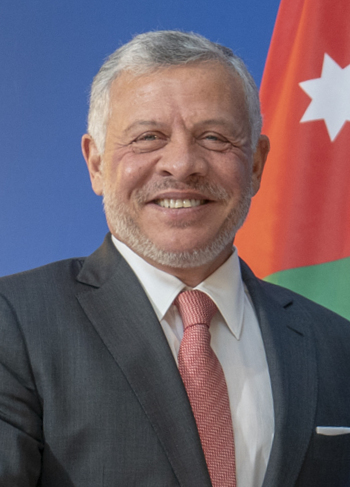
King Abdullah II Ibn Al Hussein is regarded as the 43rd-generation direct descendant of the Prophet Muhammad. He assumed his constitutional powers as King of the Hashemite Kingdom of Jordan on 7 February 1999, the day his father, the late King Hussein, passed away. Since then, he has built on his father's legacy, working to strengthen Jordan's democratic institutions and political pluralism while pursuing a just and comprehensive peace in the region.
Born in Amman on 30 January 1962, King Abdullah is the eldest son of the late King Hussein. He began his education at the Islamic Educational College in Amman before continuing at St Edmund's School in Surrey, England, Eaglebrook School in Massachusetts, and Deerfield Academy in the United States. In 1980 he entered the Royal Military Academy Sandhurst in the United Kingdom, and in 1984 he studied International Politics and World Affairs at Oxford University.
His military career took him from Captain and Commander of a Tank Company in the 91st Armored Brigade to Tactics Instructor with the Royal Jordanian Air Force's Helicopter Anti-Tank Wing, where he qualified as a Cobra Attack Helicopter pilot. In 1987 he attended the School of Foreign Service at Georgetown University in Washington, D.C., undertaking advanced study in international affairs.
Returning to Jordan, King Abdullah continued to rise through the ranks of the armed forces: 2nd-in-Command of the 17th Tank Battalion, Armor Representative in the Office of the Inspector General, commander of the 2nd Armored Car Regiment, Deputy Commander of the Jordanian Special Forces, and eventually commander of the Royal Jordanian Special Forces as a Brigadier General. In October 1997 he was appointed commander of the Special Operations Command, and in May 1998 he was promoted to Major General. Alongside his military career, he served on many occasions as Regent in the absence of King Hussein and represented Jordan on visits to numerous countries.
King Abdullah II married Queen Rania on 10 June 1993. Their Majesties have four children: Prince Al Hussein, born 28 June 1994; Princess Iman, born 27 September 1996; Princess Salma, born 26 September 2000; and Prince Hashem, born 30 January 2005. King Abdullah is a qualified frogman, pilot and free-fall parachutist, and his personal interests include car racing — he is a former Jordanian National Rally Racing Champion — water sports, scuba diving and collecting historic weapons and armaments.
Her Majesty Queen Rania
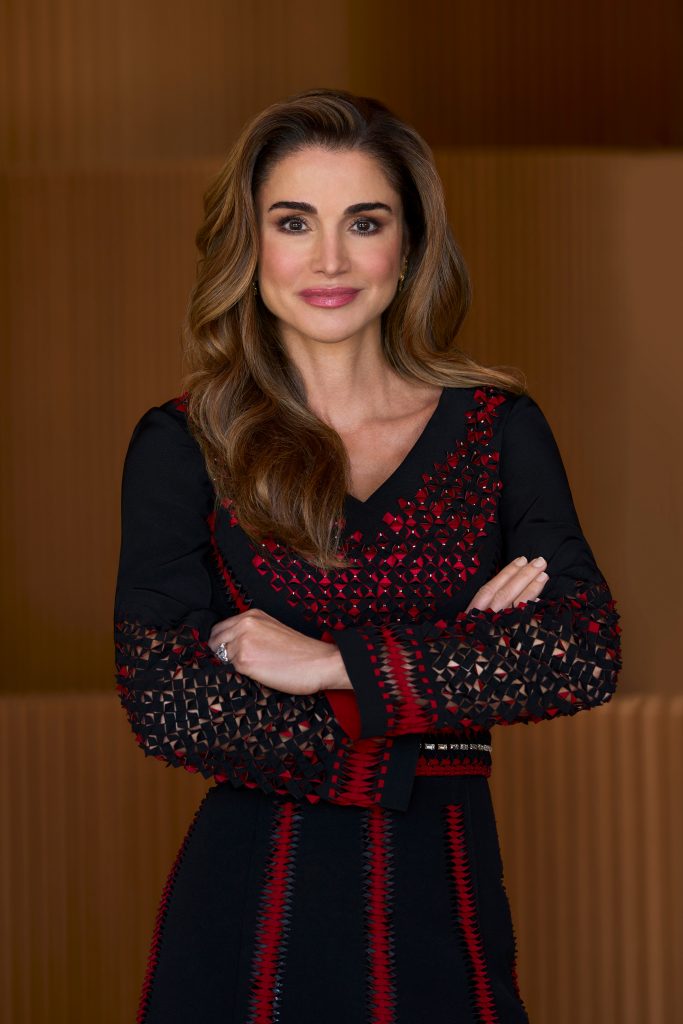
Queen Rania Al Abdullah is widely known as an international voice for cross-cultural dialogue and as an advocate for expanding health and educational opportunities in Jordan and beyond. Since her marriage to then-Prince Abdullah in 1993, she has directed much of her energy toward initiatives that improve the lives of Jordanian families and communities.
Queen Rania has spoken at major international forums, including the Jeddah Economic Forum, the Kennedy School of Government at Harvard University, and the Skoll Foundation in the UK, campaigning for greater understanding between cultures. Education has been one of her central interests: in October 2005 she launched the Queen Rania Al Abdullah Award for Excellence in Education, an annual honour recognising outstanding teachers across the Kingdom.
As Regional Ambassador for INJAZ Arabia, part of Junior Achievement Worldwide, Queen Rania has supported the organisation's work preparing young people for the job market since launching it in Jordan in 2001. She also established the Kingdom's first hands-on children's museum in Amman, which opened in May 2007 with over 150 exhibits designed for children aged 14 and under.
Since 1995, Queen Rania has chaired the Jordan River Foundation (JRF), which has developed socio-economic projects supporting women's employment, handicraft production and entrepreneurship across Jordan. In 1997 she oversaw the launch of JRF's Child Safety Program, addressing child abuse and neglect for the first time in Jordan, and she remains closely involved with Dar Al Aman (House of Safety), the first centre of its kind for abused and neglected children in the Middle East. She also heads the National Council for Family Affairs (NCFA), which works to strengthen family protection and unity policy in Jordan.
Queen Rania has served on the boards of a number of international organisations, including the World Economic Forum, the United Nations Foundation, the International Youth Foundation, the Foundation for International Community Assistance, and the GAVI Fund, which supports vaccine access for children in the world's poorest countries. She was UNICEF's first Eminent Advocate for Children and has served as the World Health Organization's Patron for Violence Prevention in the Eastern Mediterranean Region. Her humanitarian work has been recognised with numerous international awards.
Born Rania Al Yassin in Kuwait on 31 August 1970 to a Jordanian family of Palestinian origin, Queen Rania completed her early education there before earning a bachelor's degree in Business Administration from the American University in Cairo in 1991. She then returned to Jordan, working first in banking and later in information technology, before meeting Prince Abdullah at a dinner party in 1993. She is fluent in Arabic and English and has a working knowledge of French.
The Hashemites
Early History
The Hashemite family traces its roots to the Prophet Abraham and his son Ishmael. In the 5th century AD, an Arab leader named Qusai Bin Kilab, a descendant of Ishmael from the tribe of Quraysh, assumed power in Mecca, then already a centre of international trade and the spiritual capital of the region. Qusai was the first of many Hashemites to govern the holy city, forging an annual pact between warring tribes that eased the passage of pilgrims and protected caravans — an early achievement that marked a new era for Arab society.
The Hashemite name comes from Hashem, a grandson of Qusai and the great-grandfather of the Prophet Muhammad. Jordan's Hashemites are thus direct descendants of the Prophet through his daughter, Fatima, and her husband, Ali. Later, the Abbasid caliphs of the 8th to 13th centuries were also of Hashemite lineage, and when the Abbasid Empire fell, the Hashemite family remained as tribal leaders in the Hijaz and as emirs of Mecca, a role they held into the 20th century.
Sharif Hussein and the Arab Revolt
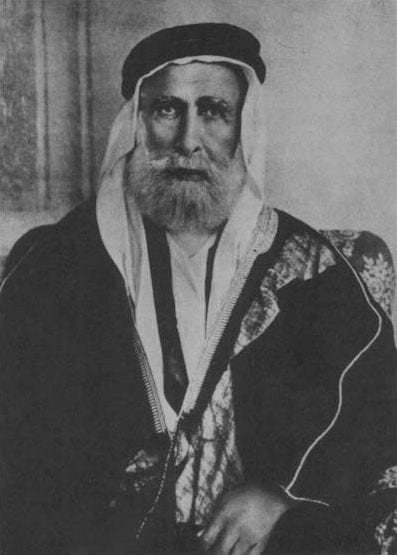
Sharif Hussein Bin Ali, leader of the Great Arab Revolt and Sharif of Mecca, was born in Ottoman Istanbul in 1853. He spent much of his life among the bedouin Arabs of the Hijaz, and in 1908 the Ottomans appointed him Emir of Mecca in recognition of his regional influence. As Ottoman rule grew more oppressive following the "Young Turks" coup, Sharif Hussein built support among Arabs by opposing Istanbul's policies in the Hijaz, and is often credited as an early voice for the idea of Arab national independence.
In 1916, Sharif Hussein allied the Arabs with British forces, leading — together with his sons Abdullah and Faisal — tribes from across the Hijaz in a revolt that freed the Levant from Ottoman control. As the central figure of the revolt, he earned the title "King of the Arabs," though the European powers subsequently failed to honour their commitments to Arab sovereignty, installing colonial rule across the Levant instead. Sharif Hussein died in Amman in 1931.
King Abdullah I and the Founding of Jordan
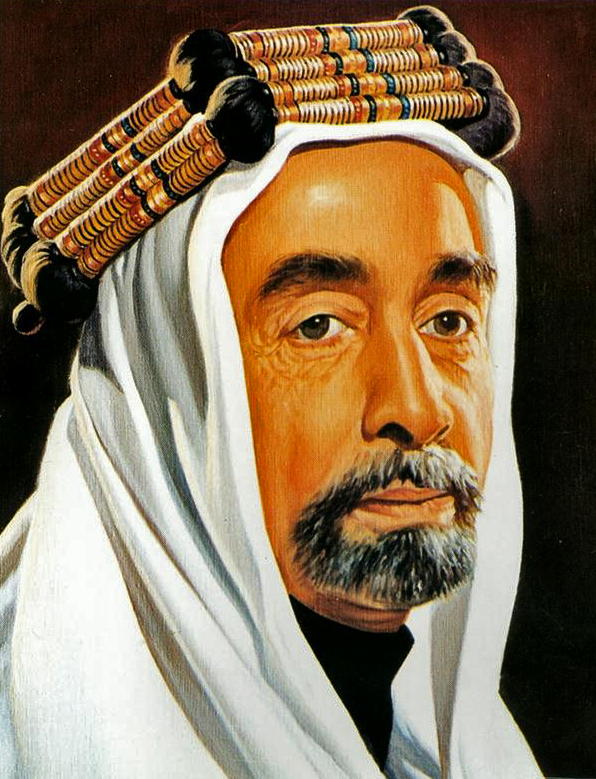
Born in Mecca in 1882, Abdullah I was the founder of the modern state of Jordan. Like his father, he began his public life within the Ottoman court, but his education and close ties to Arab tribal life made him increasingly attuned to the region's growing nationalist sentiment. During the Arab Revolt, he led Arab battalions against Ottoman forces before settling in Ma'an, where he built support and unity among the tribes and townspeople of the region that would become Jordan.
In 1921 he formed his first government in Amman, establishing the Emirate of Transjordan. Over the following three decades he focused on state-building: overseeing the country's first legislative council in 1928, the drafting of a constitution, and the first parliamentary elections the following year. Transjordan gained its independence on 22 March 1946, and Abdullah was crowned king later that year.
As King Abdullah I worked to centralise government in Jordan, war broke out between Arab and Zionist forces over the future of Mandate Palestine. When the 1948 Arab-Israeli War began, Jordan's Arab Legion defended Jerusalem and other parts of Palestine, and two years later Jordan and the West Bank were united into a single state. King Abdullah I regularly attended Friday prayers at Al Aqsa Mosque in Jerusalem, and it was there, on 20 July 1951, that he was assassinated on the mosque steps. His young grandson Hussein was at his side; a bullet aimed at the boy was deflected by a medal his grandfather had pinned to his chest earlier that day.
King Talal
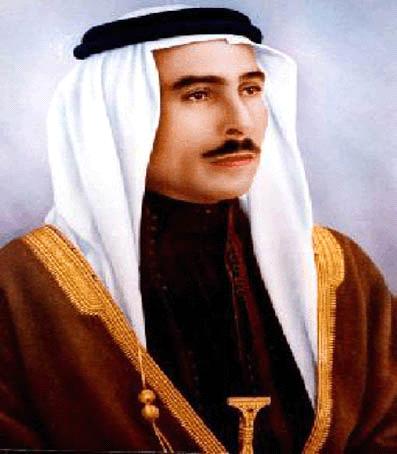
Following the death of King Abdullah I, his son Talal ascended the throne. Though his reign was brief — he abdicated due to ill health in favour of his eldest son, Hussein — King Talal introduced a liberalised constitution that made the government more accountable to parliament, laying groundwork for Jordan's later political development. King Talal Bin Abdullah died in 1972.
King Hussein
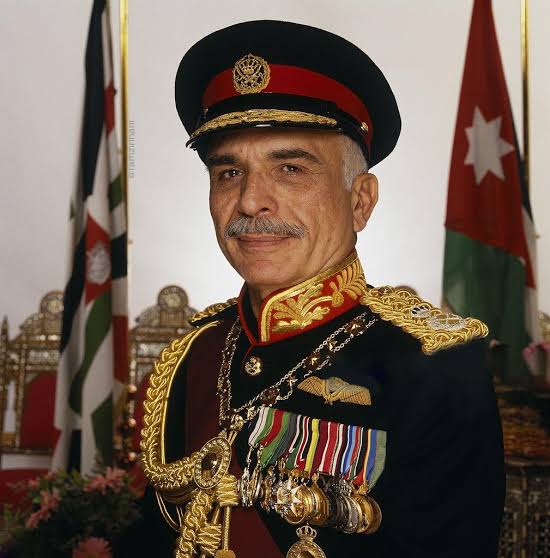
Hussein Bin Talal was born in Amman on 14 November 1935 to then-Prince Talal and Princess Zein Al Sharaf Bint Jamil, herself a Hashemite. He was proclaimed king at just 17 years of age, too young under Jordanian law to assume royal powers, and was guided by a Regency Council until his formal coronation on 2 May 1953 at the age of 18. He was educated at Victoria College in Alexandria, Egypt, and later at Harrow School and the Royal Military Academy Sandhurst in the United Kingdom.
King Hussein is widely regarded as the architect of modern Jordan and a statesman who guided the country through the upheavals of the late 20th century. He believed Jordan's people were its greatest asset and worked to expand education throughout the Kingdom: during his reign, primary school enrolment rose sharply, and national literacy climbed from 33 per cent in 1960 to 85.5 per cent by 1996.
Across his 47-year reign, King Hussein was a persistent advocate for Middle East peace. Following the 1967 Arab-Israeli War, he helped draft United Nations Resolution 242, which became the benchmark for later peace negotiations, and in 1991 he played a central role in convening the Madrid Peace Conference. In 1994, Jordan became the second Arab country to sign a peace treaty with Israel — a step he regarded as necessary for regional stability.
King Hussein also set Jordan on a path of political liberalisation, holding elections from 1989 onward and, in 1990, appointing a royal commission representing the full spectrum of Jordanian political thought to draft a National Charter. That charter, alongside the Jordanian Constitution, remains a guiding framework for democratic development in the Kingdom. At the time of his passing on 7 February 1999, King Hussein was the longest-serving head of state in the world, and his death was mourned by leaders and dignitaries worldwide. He was succeeded by his eldest son, Abdullah, who was crowned on 9 June 1999.