All About Jordan
Jordan Sites & Attractions
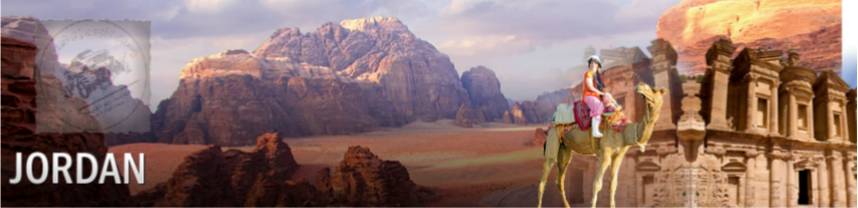
Jordan packs an extraordinary range of history, nature and landscape into a small country. From the rose-red monuments of Petra and the towering desert of Wadi Rum to Roman ruins, Crusader castles, biosphere reserves and the shores of the Dead Sea, the sites below give a sense of what the country has to offer, organised by region to help you plan where to explore.
Northern Jordan

Ajloun Castle
Set among the pine-forested hills of the Ajlun–Dibbeen area, this 12th-century Ayyubid fortress was built to watch the routes linking Damascus and Cairo and to counter the Crusader presence in the region. The surrounding woodland is one of the greenest corners of Jordan, making the castle and its landscape a rewarding stop in the north.
Explore →
As-Salt
Once the most important settlement between the Jordan Valley and the eastern desert, As-Salt grew wealthy as a trading link between merchants heading east and west. Its hillside streets are lined with elegant Ottoman-era stone townhouses, a legacy of the town's role as a regional trading and administrative centre.
Explore →
Umm Qays & Pella (Tabaqat Fahl)
Umm Qays occupies a dramatic ridge in Jordan's far north, its Roman and Byzantine ruins overlooking the Sea of Galilee, the Golan Heights and the Yarmouk Valley below. Nearby Pella, one of the cities of the ancient Decapolis league, adds a further layer of classical and Bronze Age history to a visit in this corner of the country.
Explore →
Jerash
Ranking alongside Petra as one of Jordan's most visited ancient sites, Jerash preserves one of the best-maintained Roman provincial cities anywhere in the Middle East, with a history of settlement stretching back thousands of years. Colonnaded streets, temples and a pair of theatres sit on a plain framed by wooded hills and fertile valleys.
Explore →Amman, Azraq & the Eastern Desert

Amman City
Built across a series of hills, Jordan's capital offers sweeping views at nearly every turn and blends ancient history with a modern, cosmopolitan pulse. Downtown Amman sits alongside a Roman theatre and hilltop citadel, while newer districts reflect the city's growth into a major regional hub.
Explore →
Azraq & Shawmari Wetland Reserve
Azraq is a rare wetland oasis in the heart of Jordan's eastern desert, managed by the Royal Society for the Conservation of Nature. Its mix of natural and historic pools, seasonal marshland and the adjoining Shawmari reserve make it a notable stop for birdlife and desert wildlife alike.
Explore →
Desert Castles
Scattered across Jordan's eastern desert, the so-called desert castles are early Islamic-era complexes prized for their frescoes, mosaics and stone and stucco carving. Their decoration draws on Persian and Graeco-Roman artistic traditions, offering insight into the region's early Islamic art and architecture.
Explore →The Dead Sea, Madaba & Central Jordan
The Dead Sea & Jordan Valley
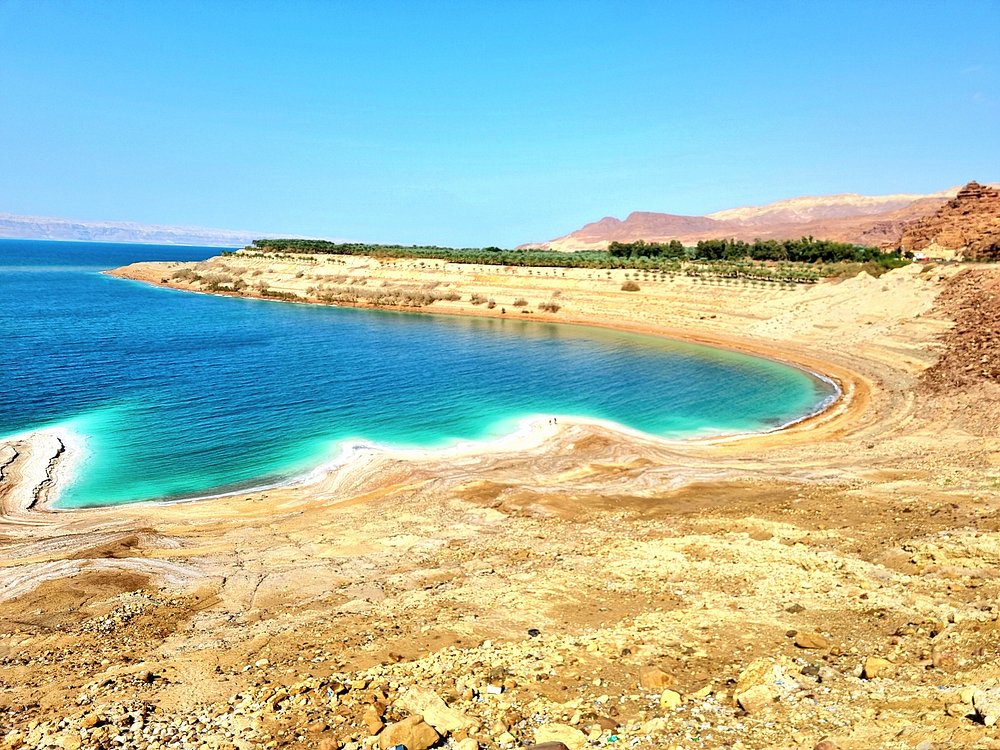
Part of the wider Jordan Rift Valley, the Dead Sea sits over 400 metres below sea level, making its shoreline the lowest point on the surface of the earth. Fed by the Jordan River and several smaller streams, its mineral-rich waters and the dramatic valley landscape around it are among Jordan's most distinctive natural features.
Explore →
Madaba, Mount Nebo, Mukawir & Umm ar-Rasas
Just outside Amman on the ancient Kings' Highway lies Madaba, known as the City of Mosaics for its extraordinary Byzantine-era floor mosaics. The surrounding area brings together Mount Nebo, traditionally linked to Moses's view of the Promised Land, the hilltop fortress of Mukawir, and the mosaic-rich ruins of Umm ar-Rasas, all within easy reach of one another.
Explore →Hammamat Ma'in / Ma'in Hot Springs
A short drive from the Dead Sea, Hammamat Ma'in is a cluster of natural hot springs and waterfalls set roughly 264 metres below sea level in a dramatic desert canyon. The warm, mineral-rich water has long drawn both local and visiting bathers to one of Jordan's most striking natural settings.
Explore →
Mujib Biosphere Reserve
The Mujib Biosphere Reserve holds the record as the lowest nature reserve on earth, occupying the deep gorge of Wadi Mujib where it meets the Dead Sea some 410 metres below sea level. The reserve's canyons and cliffs extend inland toward Karak and Madaba, sheltering plant and animal life adapted to this extreme landscape.
Explore →
Bethany Beyond the Jordan
Bethany Beyond the Jordan is traditionally identified as the site where John the Baptist lived and where, according to the Gospel of John, Jesus was baptised. Located on the eastern bank of the Jordan River, the site has long been referenced in Biblical, Byzantine and medieval sources and remains a place of quiet historical and religious significance.
Explore →Karak, Shobak & Jordan's Nature Reserves

Karak Castle
Whether approached from the historic Kings' Highway or from the Dead Sea side, Karak's fortified hilltop silhouette announces a stronghold that shaped the fate of kings and armies for centuries. The Crusader-era castle sits above the modern town, its massive walls and vaulted halls still hinting at its former strategic importance.
Explore →
Shobak Castle
Perched in a remote, windswept landscape, Shobak Castle wins over visitors despite being less architecturally complete than Karak. Its isolated hilltop setting and long history as a Crusader outpost give it a wild, atmospheric character distinct from Jordan's other castles.
Explore →
Wadi Ghuweir Tour & Trail
Wadi Ghuweir descends from the Shobak plateau through a striking red sandstone canyon, its lower stretches lined with hanging gardens fed by seasonal water. The trail's difficulty and water levels vary through the year, but its narrow, colourful walls make it one of Jordan's more memorable canyon walks.
Explore →
Dana Biosphere Reserve
Dana is Jordan's only nature reserve to span all four of the country's bio-geographical zones — Mediterranean, Irano-Turanian, Saharo-Arabian and Sudanian — packed into a single dramatic escarpment. The result is an unusual range of landscapes and wildlife within a relatively small, rugged area.
Explore →Petra, Wadi Rum & Aqaba

Petra
Carved from rose-red sandstone cliffs, Petra's tombs, temples and monuments were built by the Nabataeans over two thousand years ago and remain one of the most remarkable feats of ancient engineering anywhere in the world. Much has been written about the city, yet little compares to walking through the narrow Siq and arriving at the Treasury in person.
Explore →
Wadi Rum
Wadi Rum is a vast desert landscape of towering sandstone and granite formations, shaped over millennia by wind and weather into scenery once memorably described by T.E. Lawrence as almost otherworldly in scale. Largely untouched by development, its dunes, canyons and rock bridges make it one of Jordan's most striking natural destinations.
Explore →
Aqaba
Jordan's only coastal city sits on the Red Sea and is often overlooked by visitors focused on Petra and Wadi Rum. Beyond its own beaches and reefs, Aqaba serves as a convenient base for exploring several other attractions across southern Jordan.
Explore →