
All About Jordan
Jordanian Currency
Jordan's official currency is the Jordanian dinar, and knowing your way around it makes daily spending on the road a lot easier. Here's a practical look at the dinar, how prices are written, and what the banknotes look like — along with where to check the details that change over time, like exchange rates and current note designs.
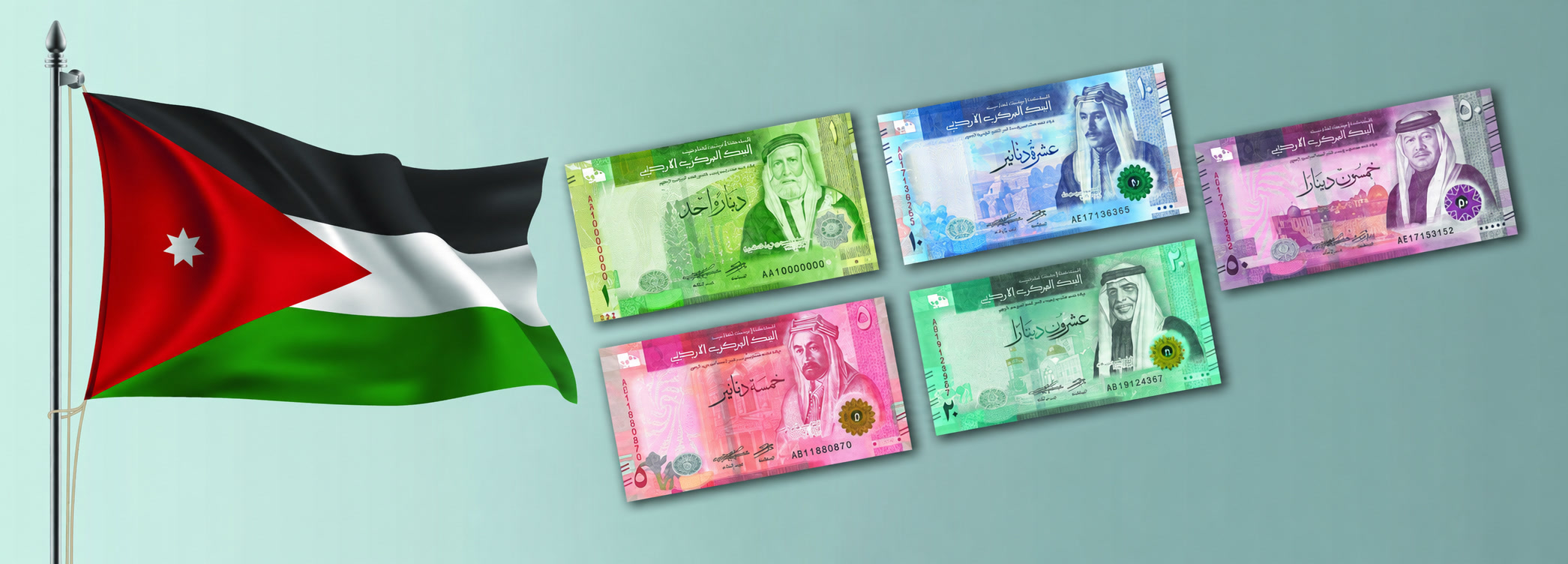
The Jordanian Dinar
The currency of Jordan is the Jordanian dinar, commonly abbreviated as JD or JOD. You'll see both abbreviations used interchangeably on price tags, menus, and receipts throughout the country.
In everyday spoken Arabic, you may also hear the dinar referred to informally as the "leerah" — a colloquial term that has stuck around from an earlier currency and is still used casually in the market, even though the official name of the currency is the dinar.
Understanding Prices and Small Change
One Jordanian dinar is divided into 100 qirsh, also called piastres, or into 1,000 fils. Fils no longer exist as physical coins, but prices are still commonly written to three decimal places out of habit and precision — for example, a price shown as 0.750 means JD 0.75, or 75 piastres.
The spoken language carries this through too: locals will sometimes refer to a 10-piastre coin as "a hundred fils," since 10 piastres equals 100 fils. It's a small detail, but useful to know when you're listening to prices being read aloud in the market.
Cash, Cards and ATMs
Cash remains widely used in Jordan, particularly for smaller purchases, taxis, and shopping in local markets. As with travel anywhere, it's sensible to carry a reasonable amount of cash for day-to-day spending and to keep it secure while you're out and about.
Cards and ATMs are commonly available in cities and larger towns, though acceptance and availability can vary by location, especially in more remote areas such as Wadi Rum. It's worth checking with your bank before travelling about international withdrawal fees and card usage abroad, and planning for some cash on hand in case a card isn't accepted somewhere.
Checking the Current Exchange Rate
Exchange rates can change, so rather than relying on a fixed number, it's best to check the current rate through a reliable, up-to-date source before exchanging money or budgeting for your trip.
Check Current Information
For up-to-date exchange rates, visit the Central Bank of Jordan and its page of current foreign exchange rates.
Jordanian Banknotes
Jordanian banknotes are issued by the Central Bank of Jordan and feature portraits of Jordan's Hashemite kings alongside historic and national landmarks on their reverse sides. Below is a general guide to the denominations you may come across, illustrated with the note designs pictured here. Note designs are periodically updated, so for the current official series, always refer to the Central Bank of Jordan directly.
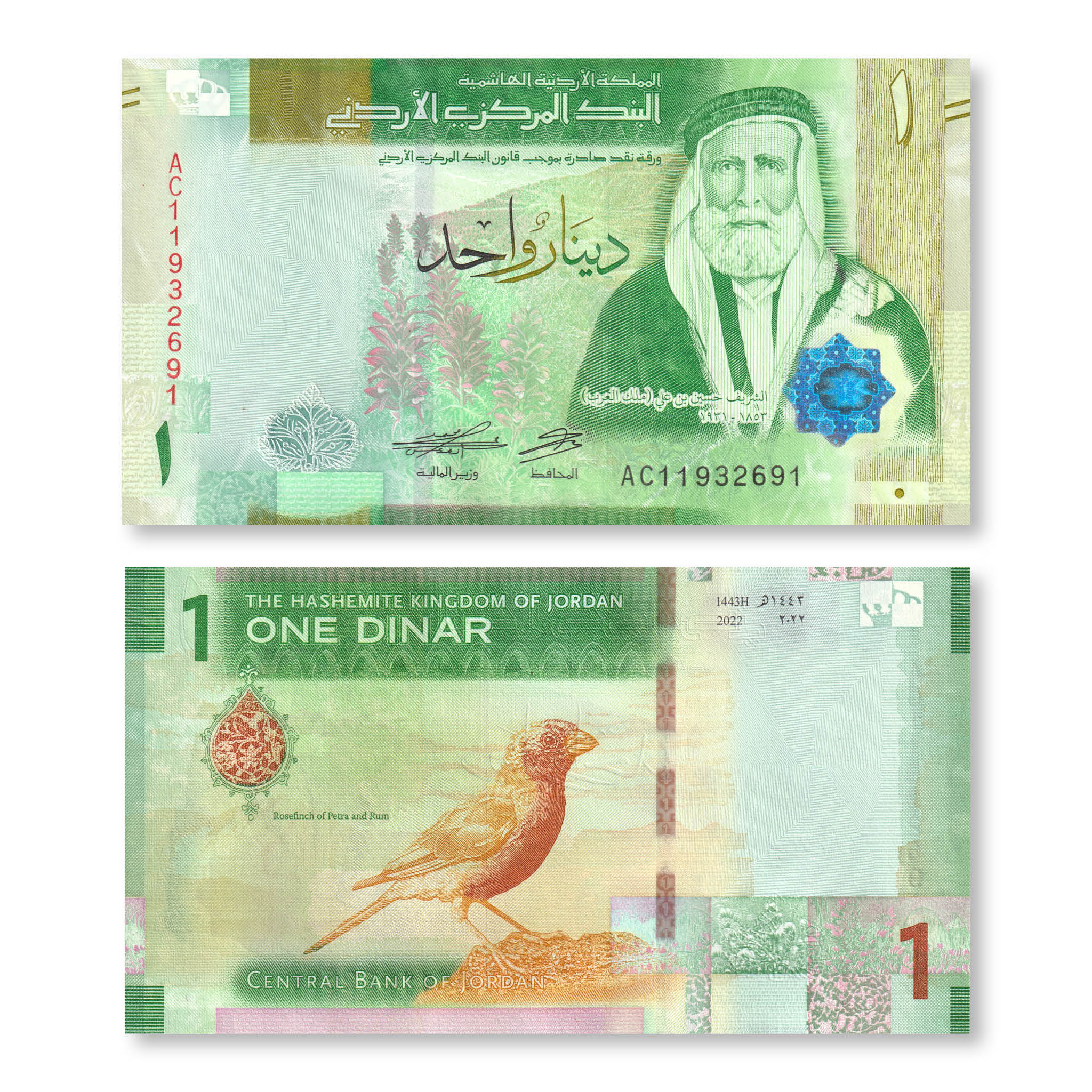
1 Dinar
The 1 JD note pictured here features the late Sharif Hussein bin Ali (1853–1931) on the front, with an image relating to the Great Arab Revolt of 1916 on the reverse. Reference dimensions for the note shown are approximately 133 mm x 74 mm.
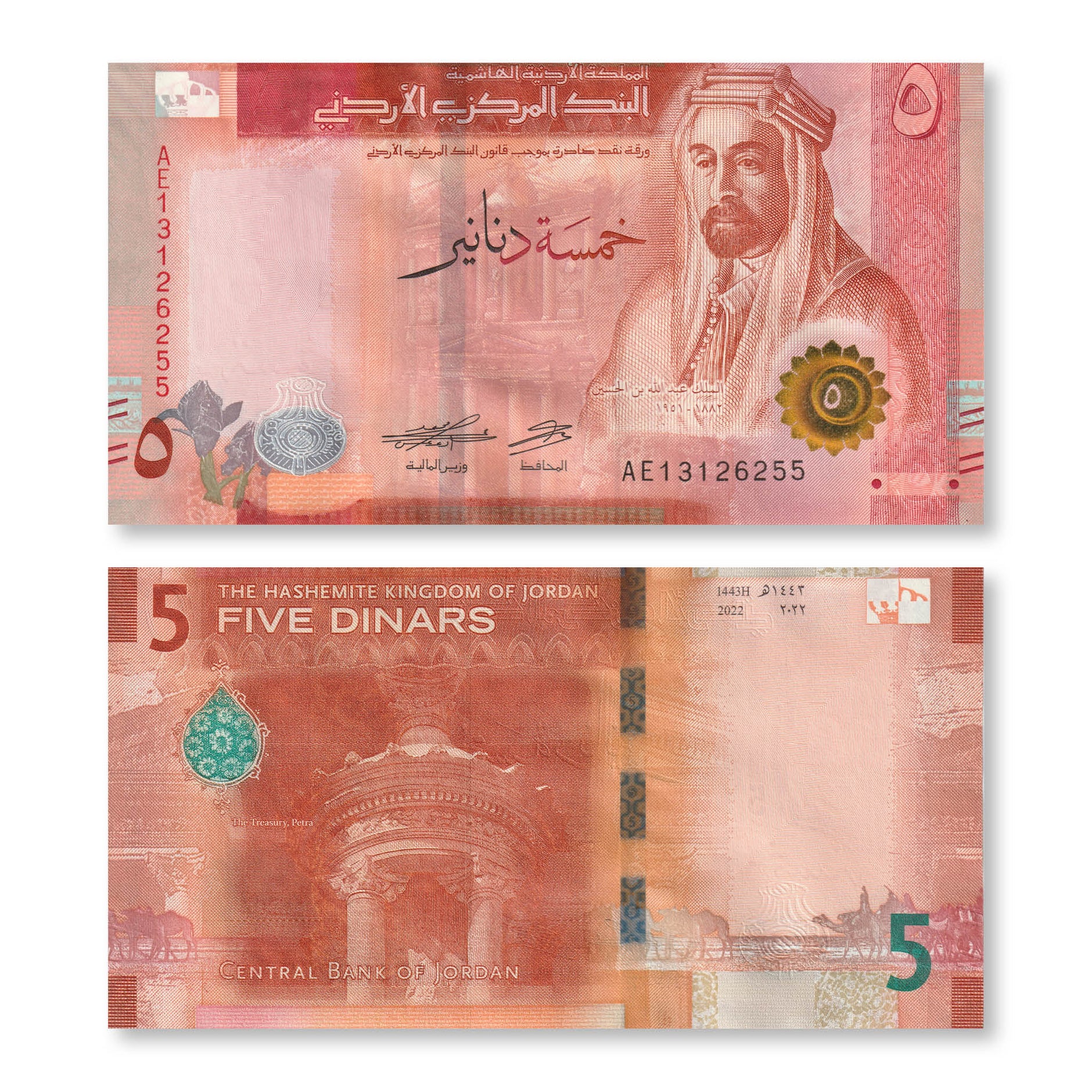
5 Dinars
The 5 JD note pictured here features the late King Abdullah I (1882–1951) on the front, with the Ma'an Palace shown on the reverse. Reference dimensions for the note shown are approximately 137 mm x 74 mm.
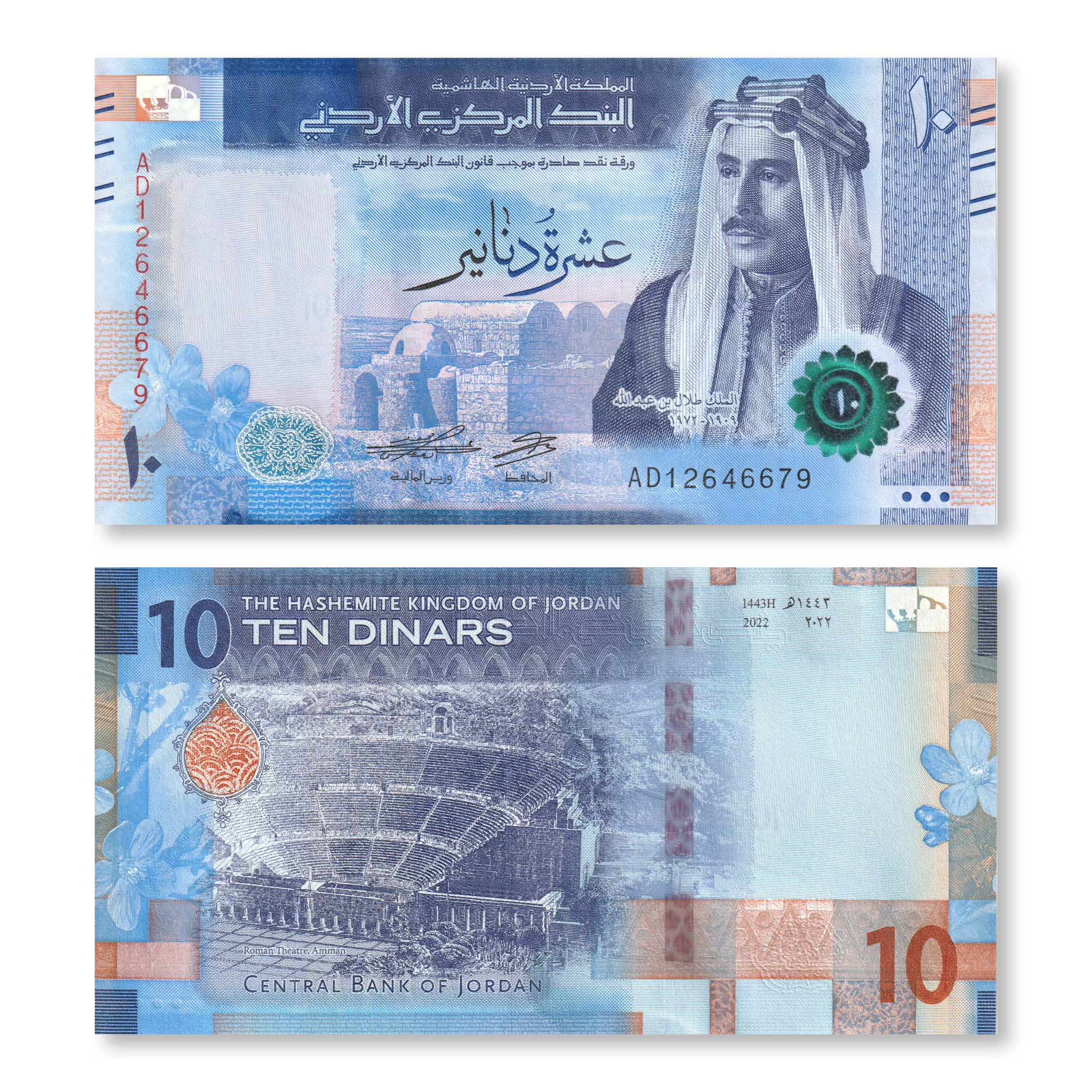
10 Dinars
The 10 JD note pictured here features the late King Talal (1909–1972) on the front, while the reverse commemorates Jordan's First Parliament. Reference dimensions for the note shown are approximately 141 mm x 74 mm.
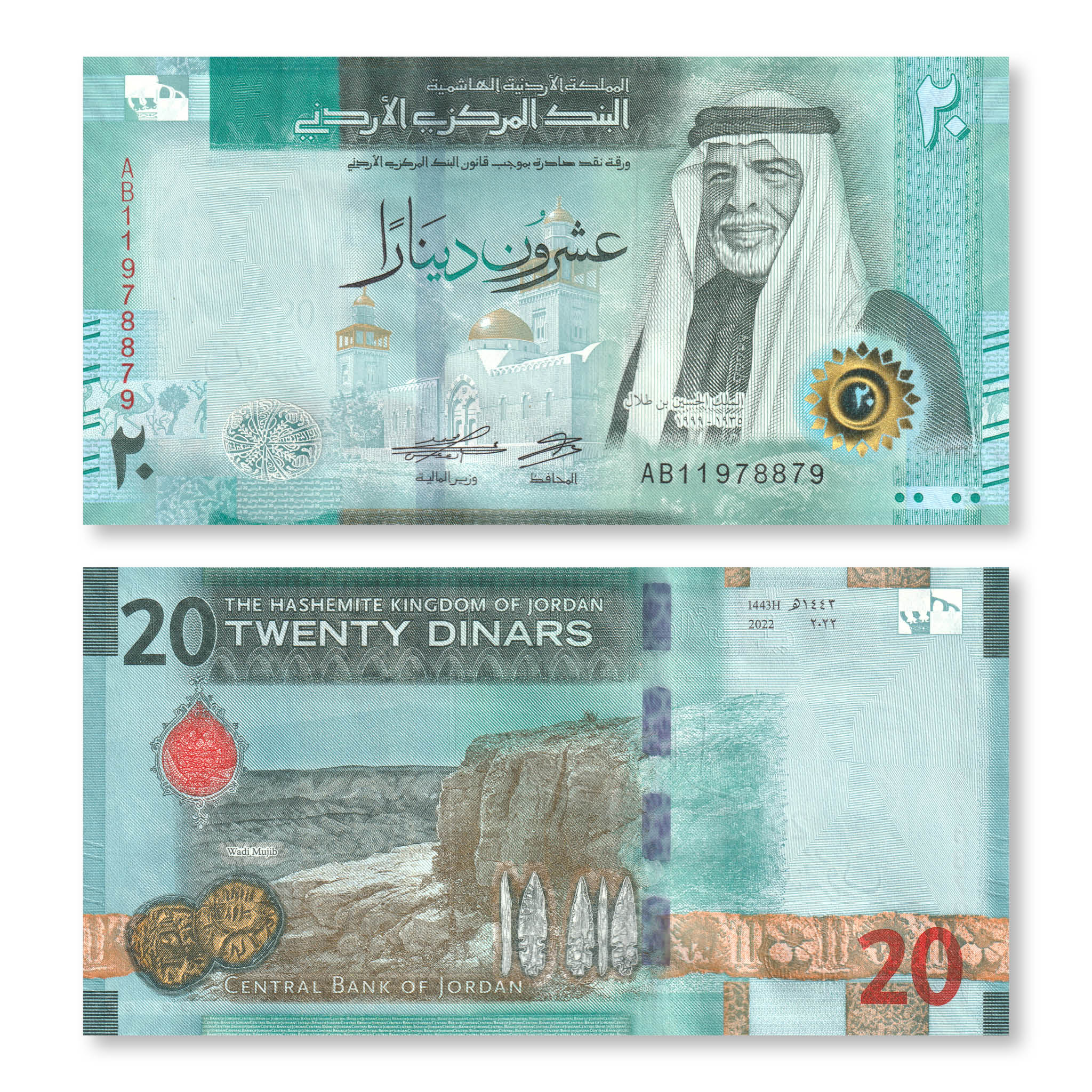
20 Dinars
The 20 JD note pictured here features the late King Hussein (1935–1999) on the front, with the Dome of the Rock in Jerusalem shown on the reverse. Reference dimensions for the note shown are approximately 145 mm x 74 mm.
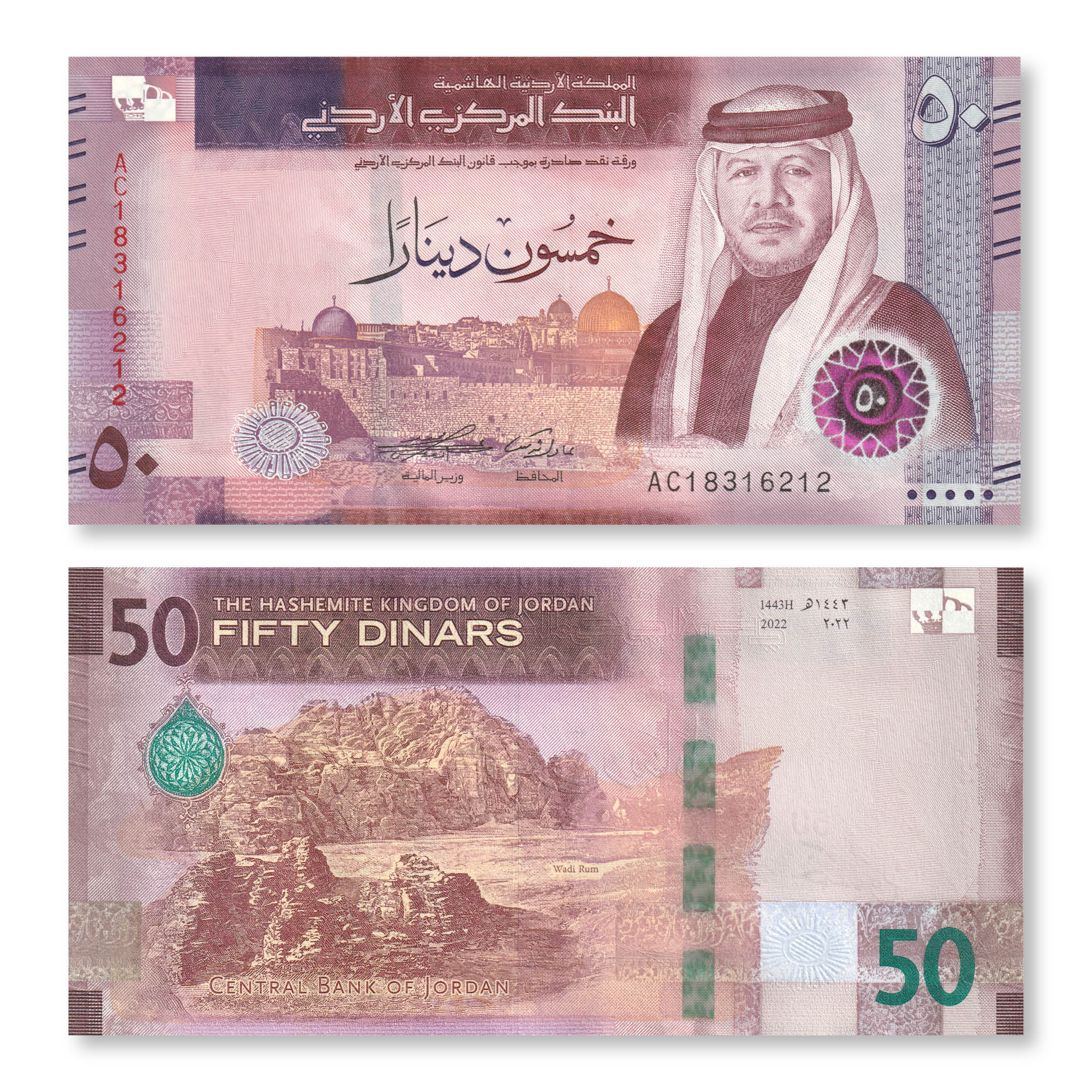
50 Dinars
The 50 JD note pictured here features His Majesty King Abdullah II on the front, with the Raghadan Palace shown on the reverse. Reference dimensions for the note shown are approximately 149 mm x 74 mm.
Banknote Security Features
Like most modern currencies, Jordanian banknotes include a range of security features designed to help confirm their authenticity. If you'd like to check the specific security features and current designs, the Central Bank of Jordan is the best source of accurate, up-to-date information.
Visit the Central Bank of Jordan for official information on banknote designs and security features.