
All About Jordan
Jordan Weather & Climate
Jordan's climate is warm, dry and sunny for most of the year, with hot summers, mild-to-cool winters, and a short rainy season concentrated between November and March. Because the country spans a wide range of elevations — from the mountain highlands around Amman and Petra down to the Jordan Valley and the Dead Sea, the lowest point on Earth — the weather can vary noticeably between destinations even on the same day. Knowing what to expect helps you pack right and choose the best time for your Petra, Wadi Rum, or wider Jordan tour.
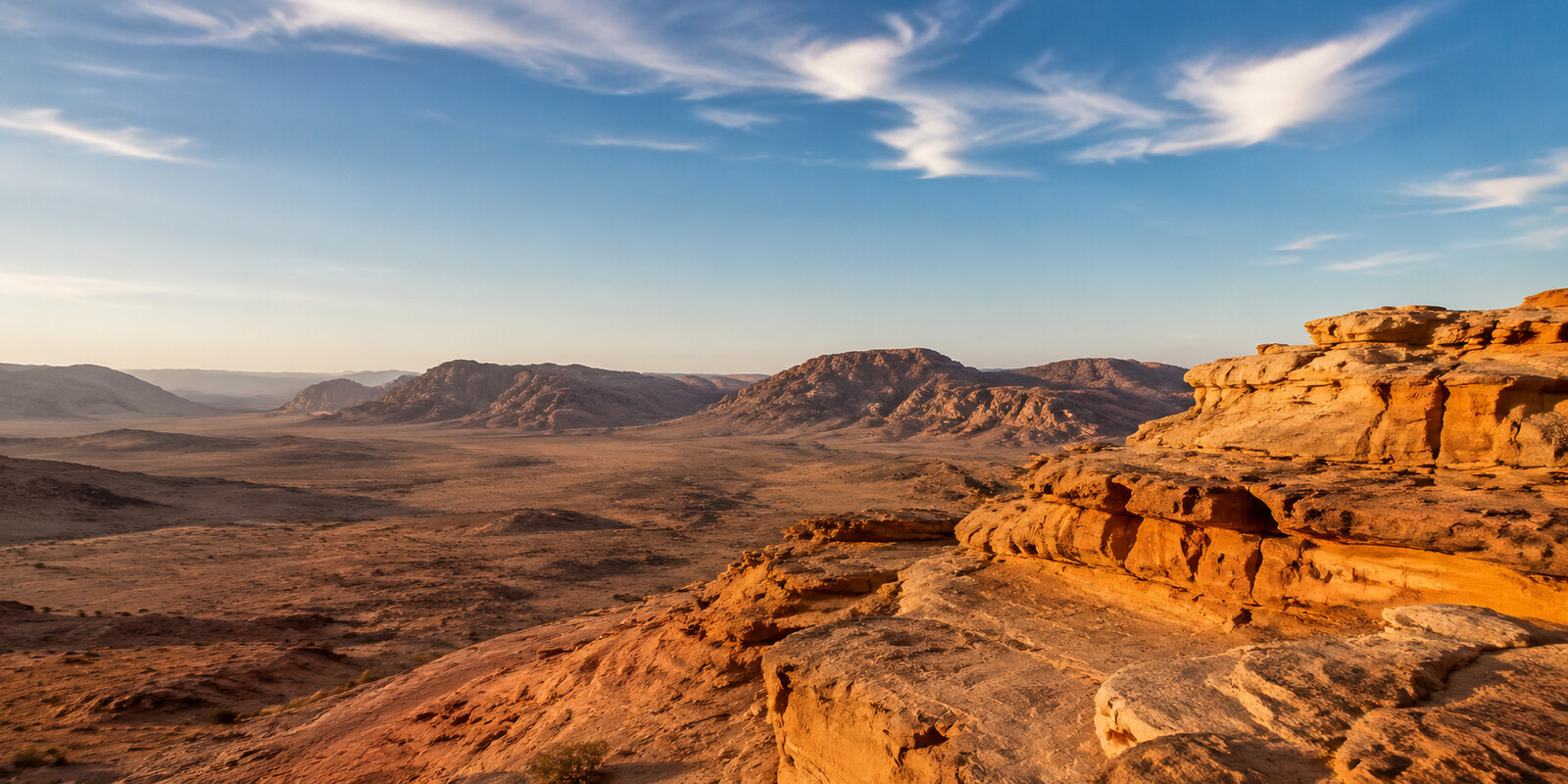
Tap the image above to check current conditions on the Jordan Meteorological Department site.
Jordan's Climate Zones
Jordan is a relatively compact country, and although the majority of its land is desert, it is divided into three distinct climatic zones. The Mountain Heights Plateau runs along the western edge of the country and is home to Amman, Madaba, Petra and most of Jordan's main tourist sites; it has a Mediterranean-influenced climate with warm, dry summers and cool, occasionally wet winters. The Jordan Valley, which runs down to the Dead Sea — the lowest point on the surface of the earth — sits far below sea level and stays warm in winter and very hot in summer. To the east and south lies the Desert or Badia region, which makes up roughly three-quarters of Jordan's total land area and has a classic arid desert climate of hot days, cool nights, and very little rainfall.
The Four Seasons
Jordan experiences a genuine four-season year — spring, summer, autumn and winter — though spring and autumn tend to be short and mild compared with the long, dry summer and the cooler winter months. Most of the country's tourist attractions lie either along the Mountain Heights Plateau or in the Jordan Valley next to the Dead Sea, so the seasonal pattern you'll notice most is the swing between hot, dry summers and cooler, sometimes rainy winters in the highlands.
Sunshine and Dry Season
Jordan is a sunny country for most of the year, with a long dry season running from roughly May to October when rainfall is rare and skies are mostly clear. Summers in the highlands, including Amman, are hot but relatively comfortable thanks to low humidity, with daytime highs typically in the low-to-mid 30s°C and cooler evenings once the sun goes down. In the Jordan Valley, temperatures can climb noticeably higher on the hottest summer days, while Aqaba in the south stays hot and dry with very little rainfall at any time of year.
Winter, Rain, and Cooler Months
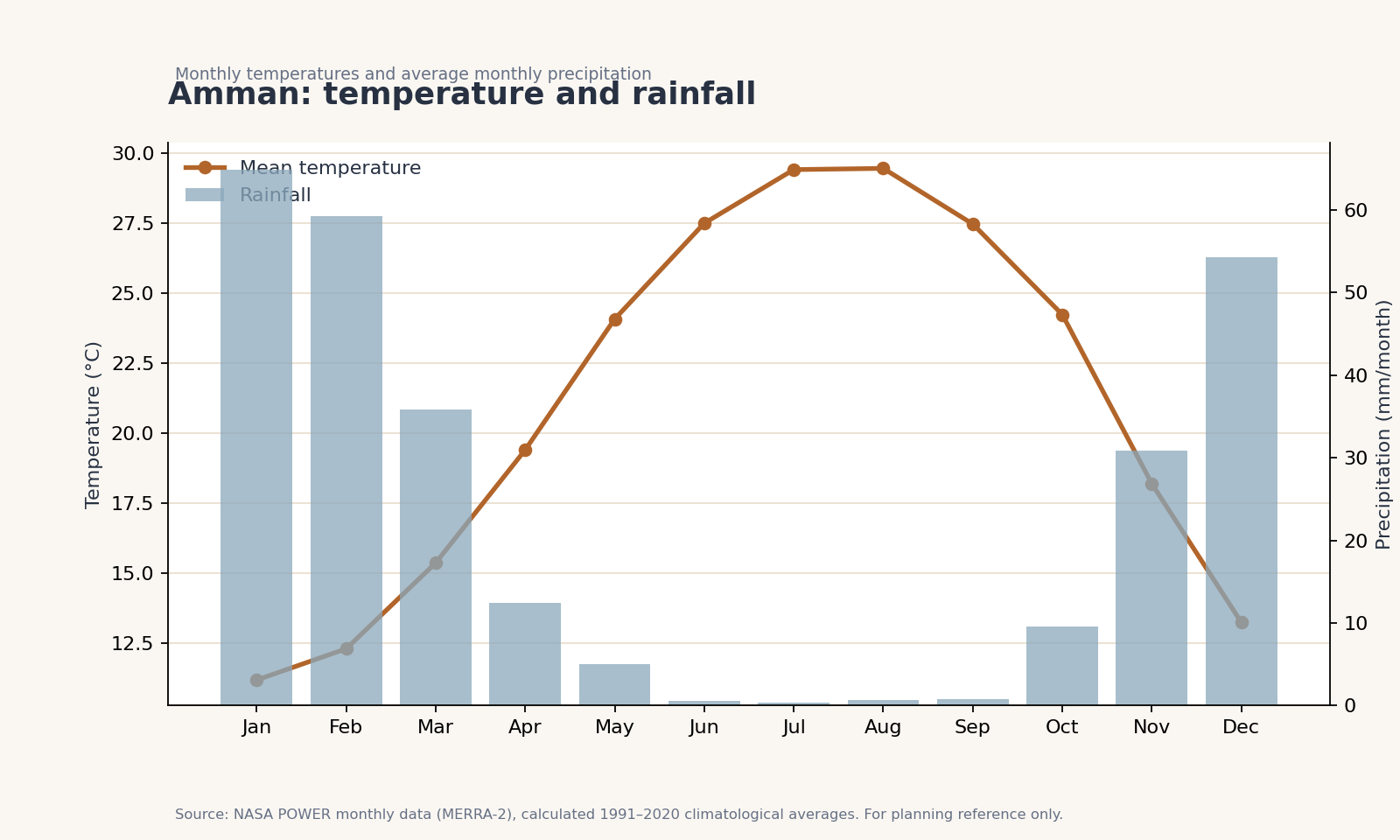
The rainy season runs mainly from November to March, with most rainfall falling across the northern and central mountain ranges rather than the desert regions to the east and south. December and January are typically the coldest months, with daytime highs in the low teens (°C) in Amman and overnight lows that can drop close to freezing on the coldest nights. Rainfall is generally moderate and irregular even during the wetter months, and the desert regions receive only a fraction of what falls in the highlands.
Chance of Snow at Higher Elevations
At elevations above roughly 1,000 metres, winter snowfall is possible, if irregular. Amman itself, at around 800–1,000 metres depending on the district, occasionally sees snow in the coldest weeks of winter, and Petra — at around 1,200 metres above sea level — has, on rare occasions, been photographed dusted in snow. These events are not something to plan a trip around, but they're worth knowing about if you're travelling in December or January.
Regional Temperature Differences
Because Jordan's landscape ranges from mountain plateau to below-sea-level valley to open desert, temperatures can differ meaningfully between destinations on your itinerary, even on the same day.
Amman
Sitting on the Mountain Heights Plateau at a relatively high elevation, Amman has the mildest climate of Jordan's main destinations: warm, dry summers, cooler evenings than the desert or the valley, and a genuine — if short — winter with occasional rain and, rarely, snow.
Aqaba and the Dead Sea
Both Aqaba, on the Red Sea, and the Dead Sea sit well below the elevation of Amman, and both are noticeably warmer year-round, most clearly in winter, when Aqaba stays several degrees warmer than the capital. Rainfall in both areas is minimal even during the wet season, and summer heat is more intense than in the highlands.
The Jordan Valley
The Jordan Valley, which lies below sea level along the Dead Sea, is the warmest of Jordan's climatic zones. It stays mild in winter and can be very hot in summer, with daytime temperatures often running well above those recorded in Amman on the same day.
Average Monthly Temperatures
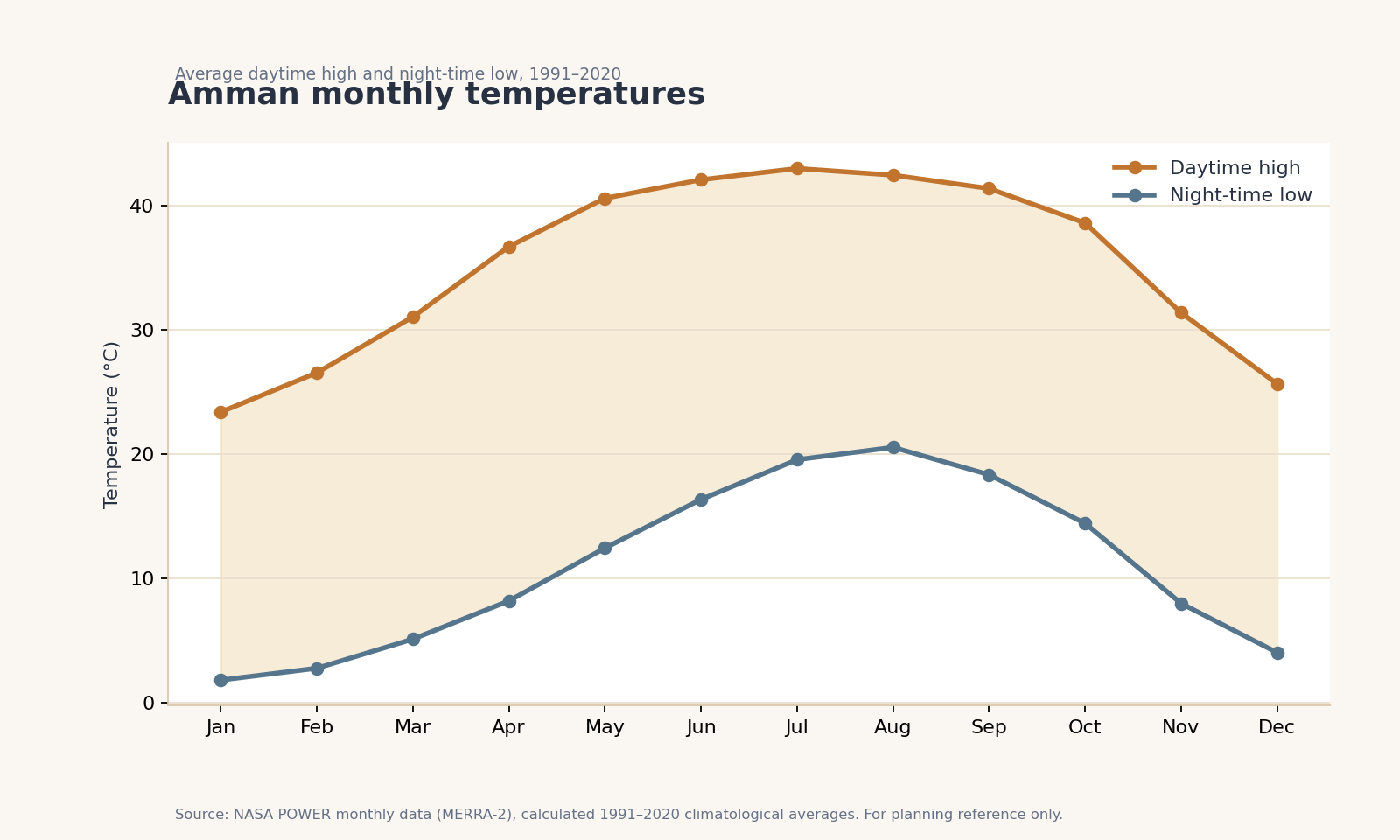
Approximate long-term average daytime and night-time temperatures for Amman. Actual conditions in Petra, Wadi Rum, Aqaba, and the Jordan Valley can vary from these figures depending on elevation and location.
| Month | Max Daytime (°C) | Min Night-time (°C) |
|---|---|---|
| January | 12°C | 3°C |
| February | 14°C | 4°C |
| March | 18°C | 7°C |
| April | 23°C | 10°C |
| May | 27°C | 14°C |
| June | 31°C | 17°C |
| July | 33°C | 19°C |
| August | 33°C | 19°C |
| September | 30°C | 18°C |
| October | 26°C | 15°C |
| November | 19°C | 9°C |
| December | 14°C | 5°C |
 Max Daytime (°C)
 Min Night-time (°C)
Climate Charts and Reference Graphics
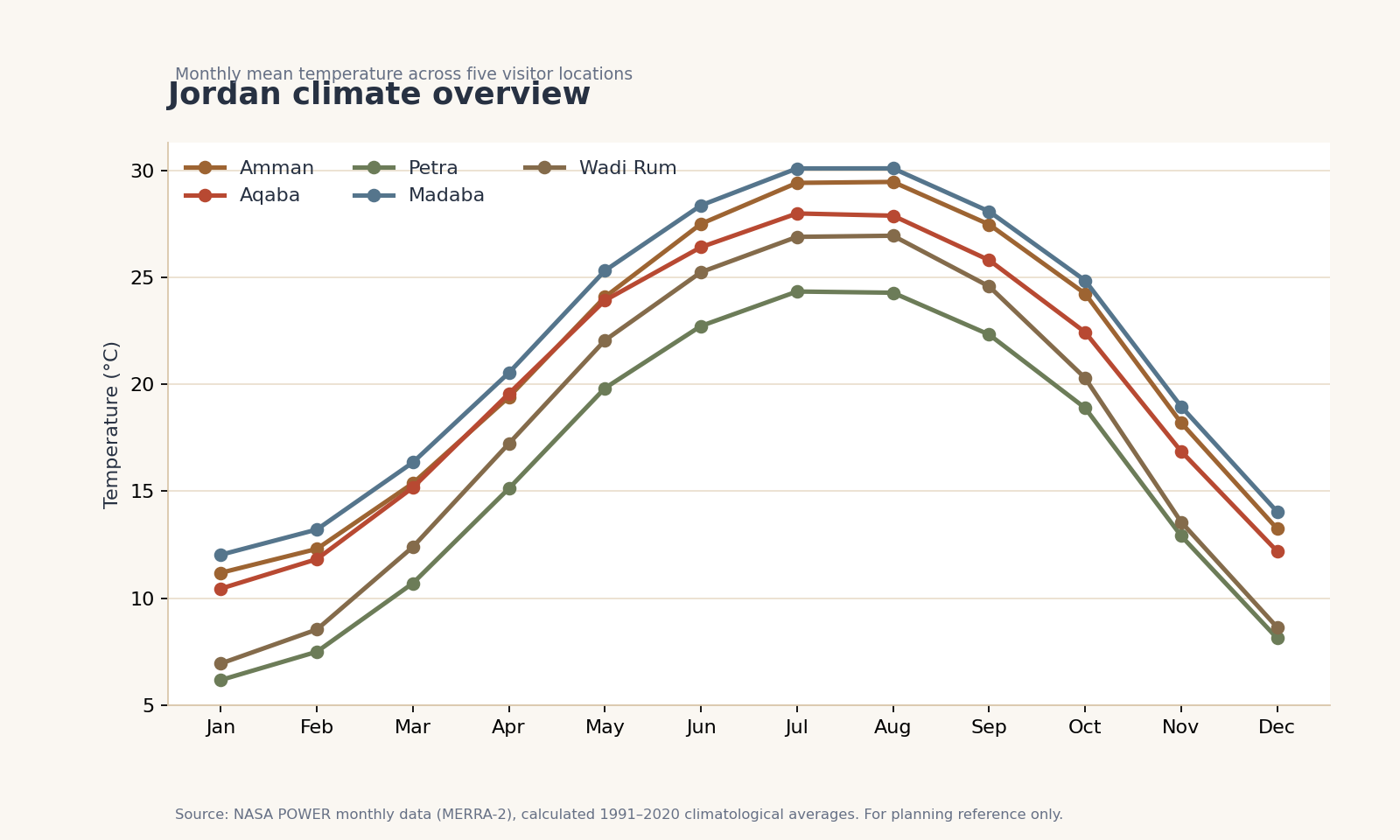
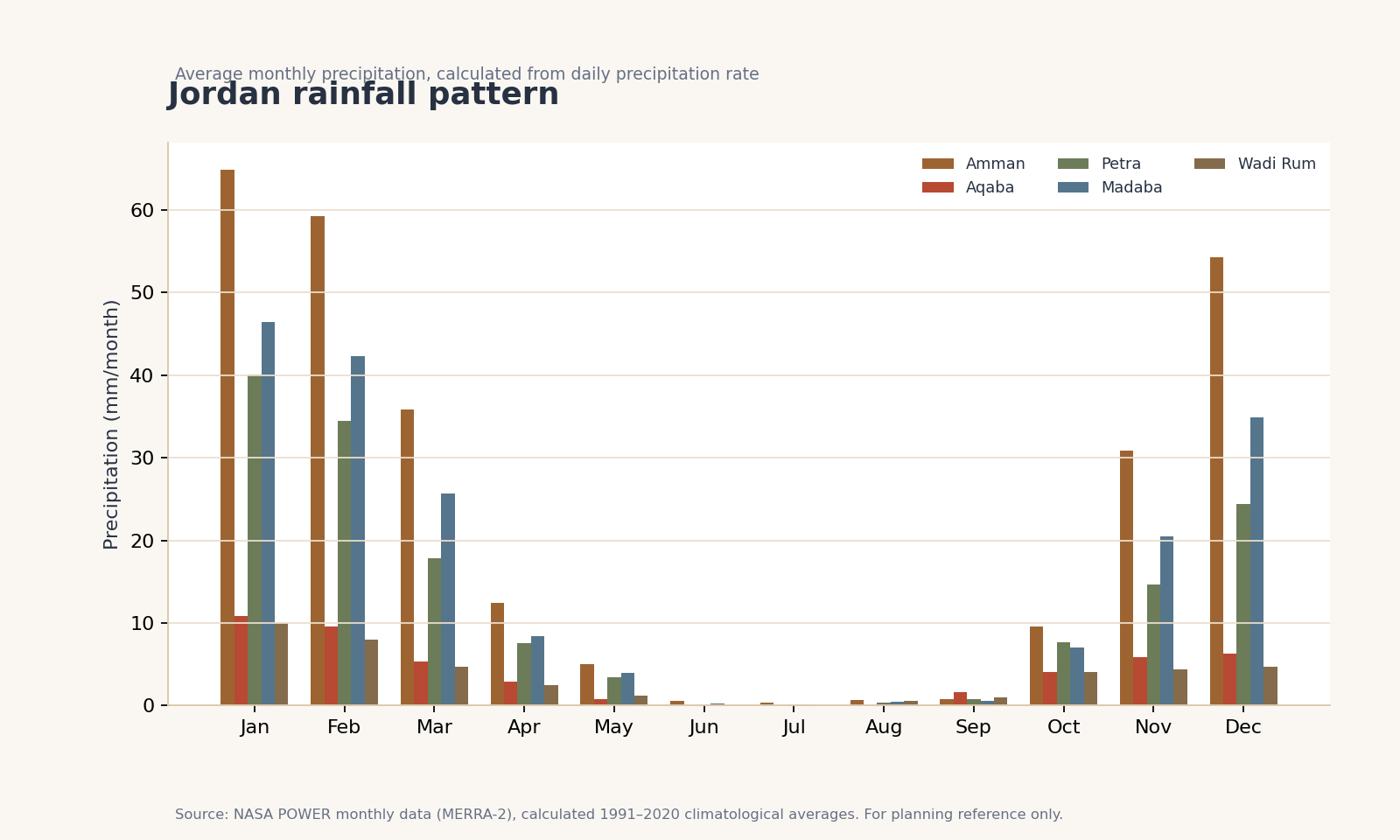
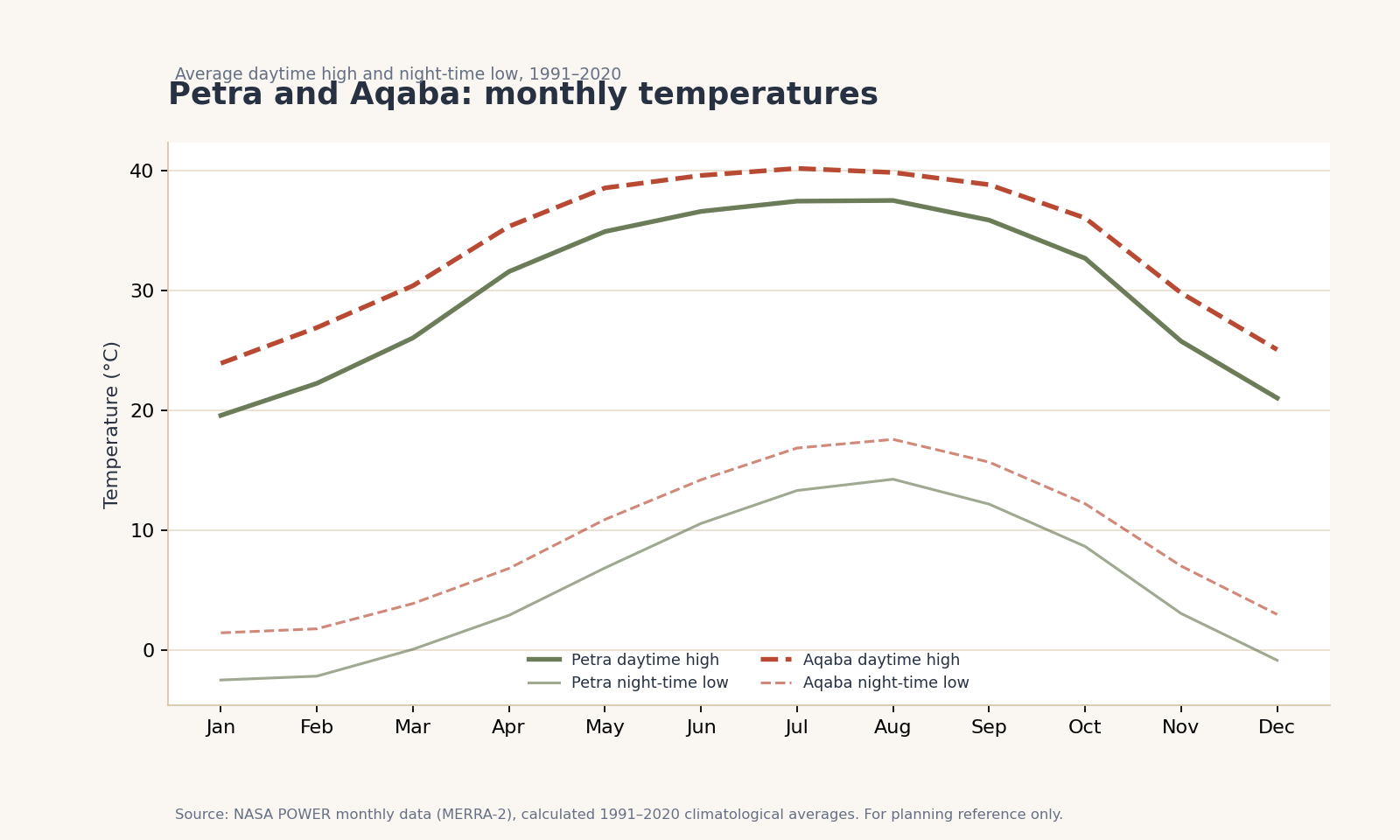
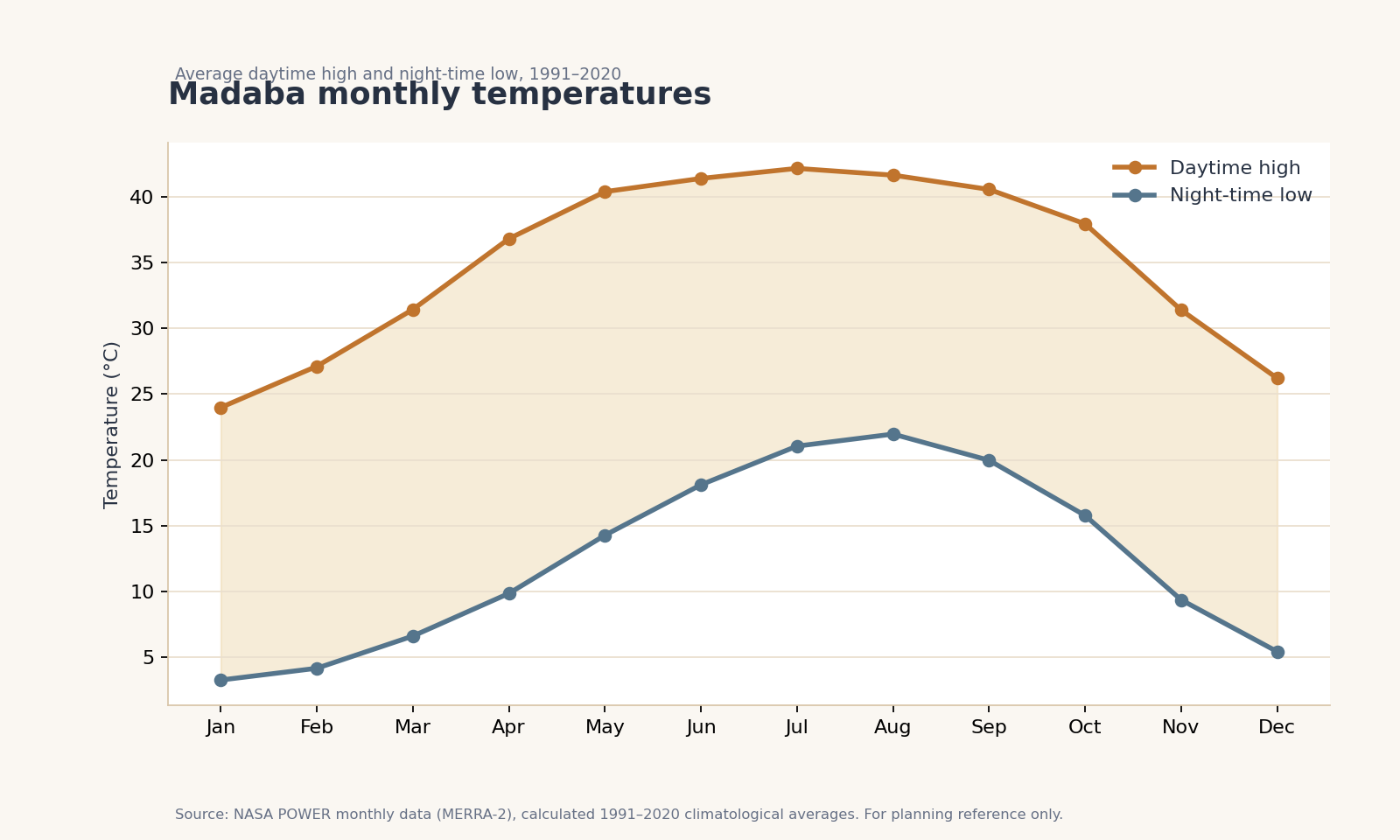
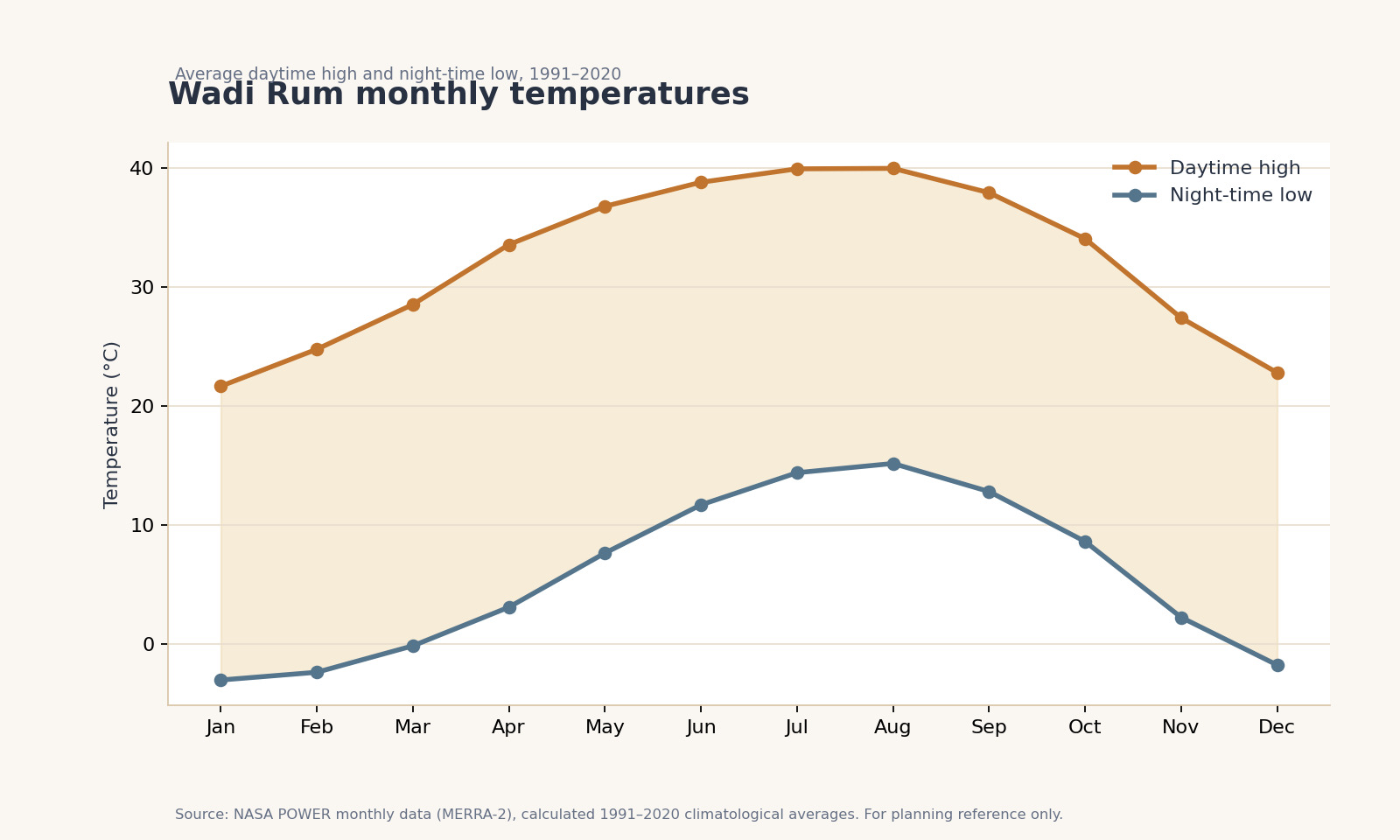
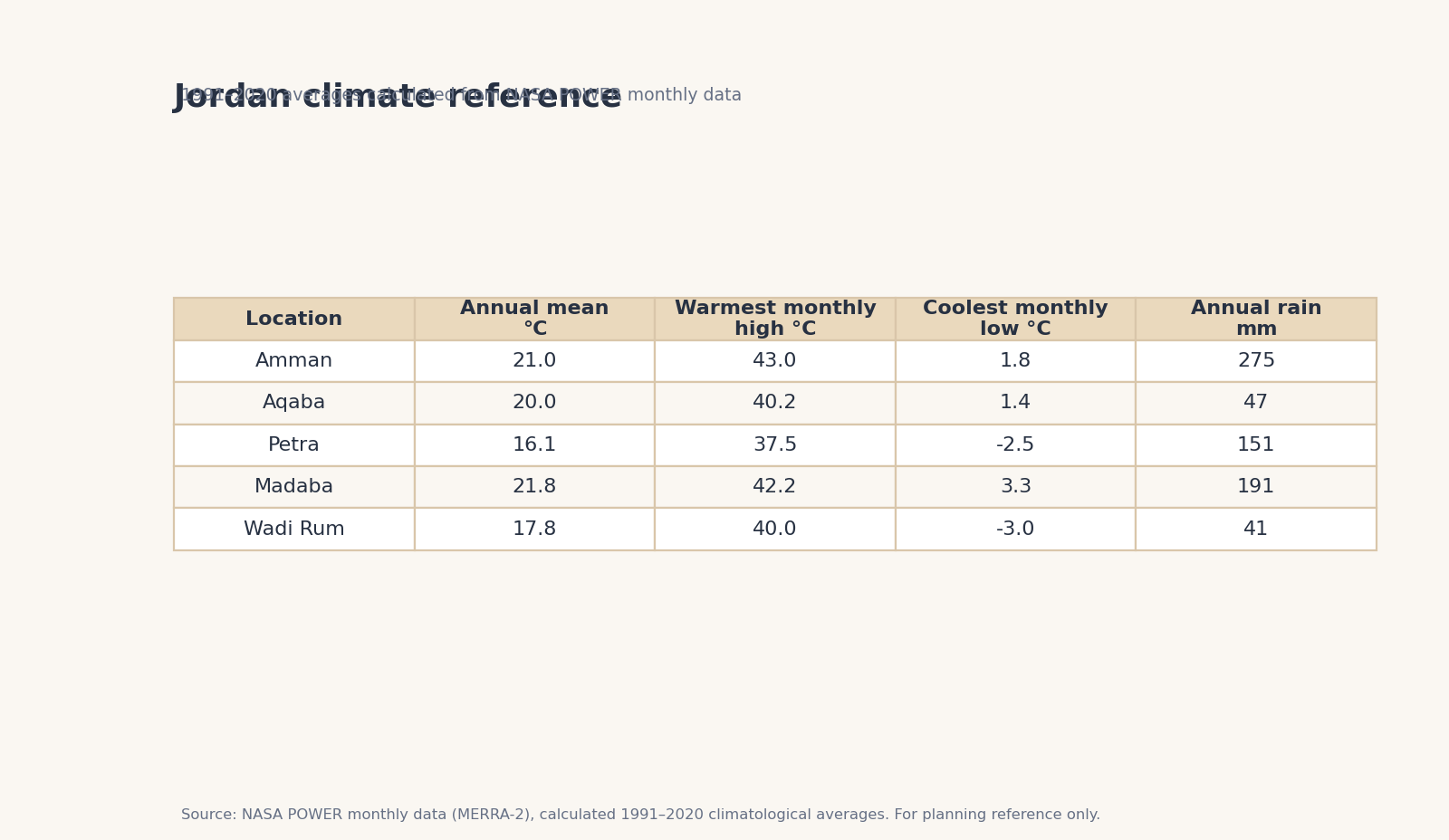
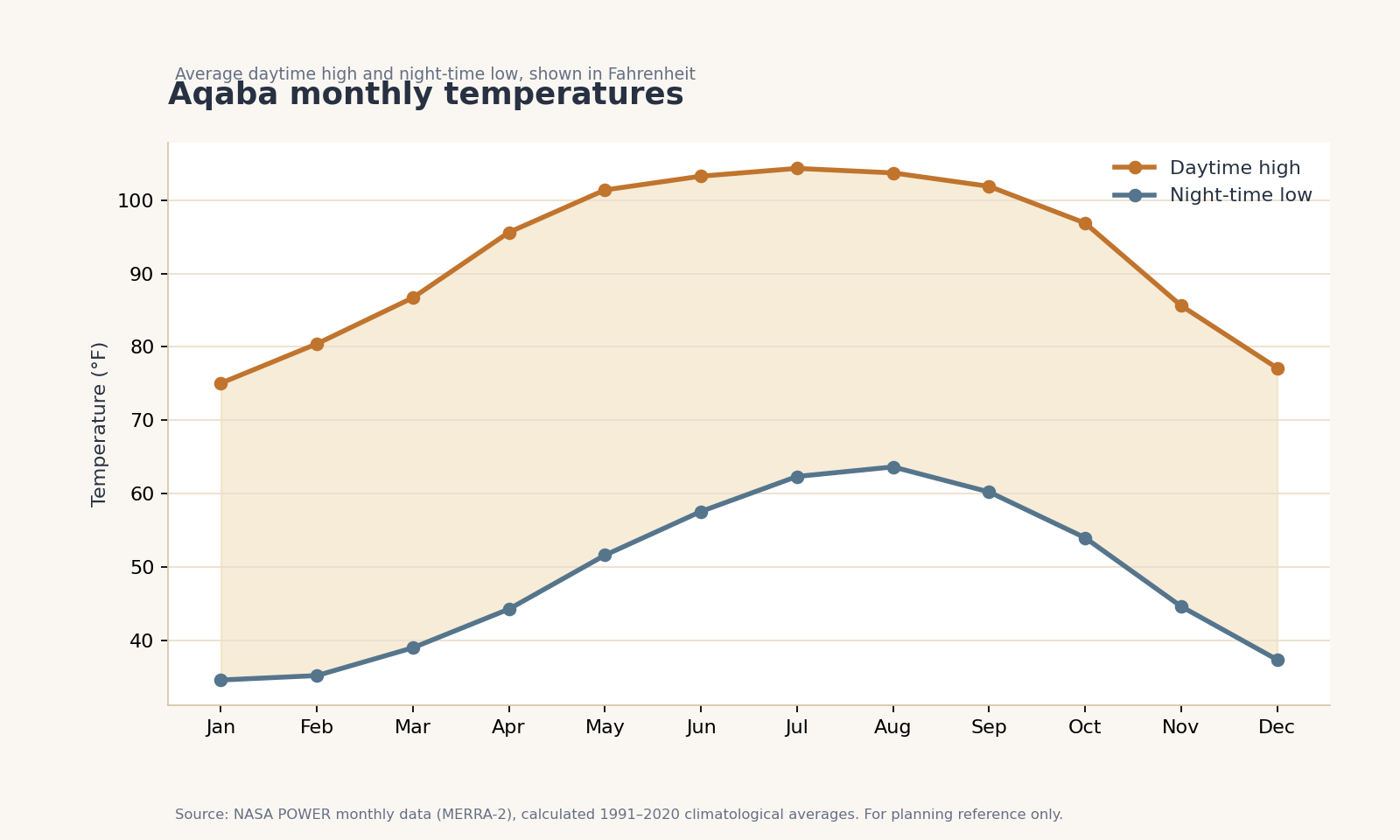
The charts below are carried over from our archived weather page as a general visual reference. Some are broad regional comparisons rather than site-specific readings — treat them as illustrative rather than precise, and use the Jordan Meteorological Department link above for current conditions.
Check Current Conditions
For up-to-date forecasts and current conditions anywhere in Jordan, the official source is the Jordan Meteorological Department: